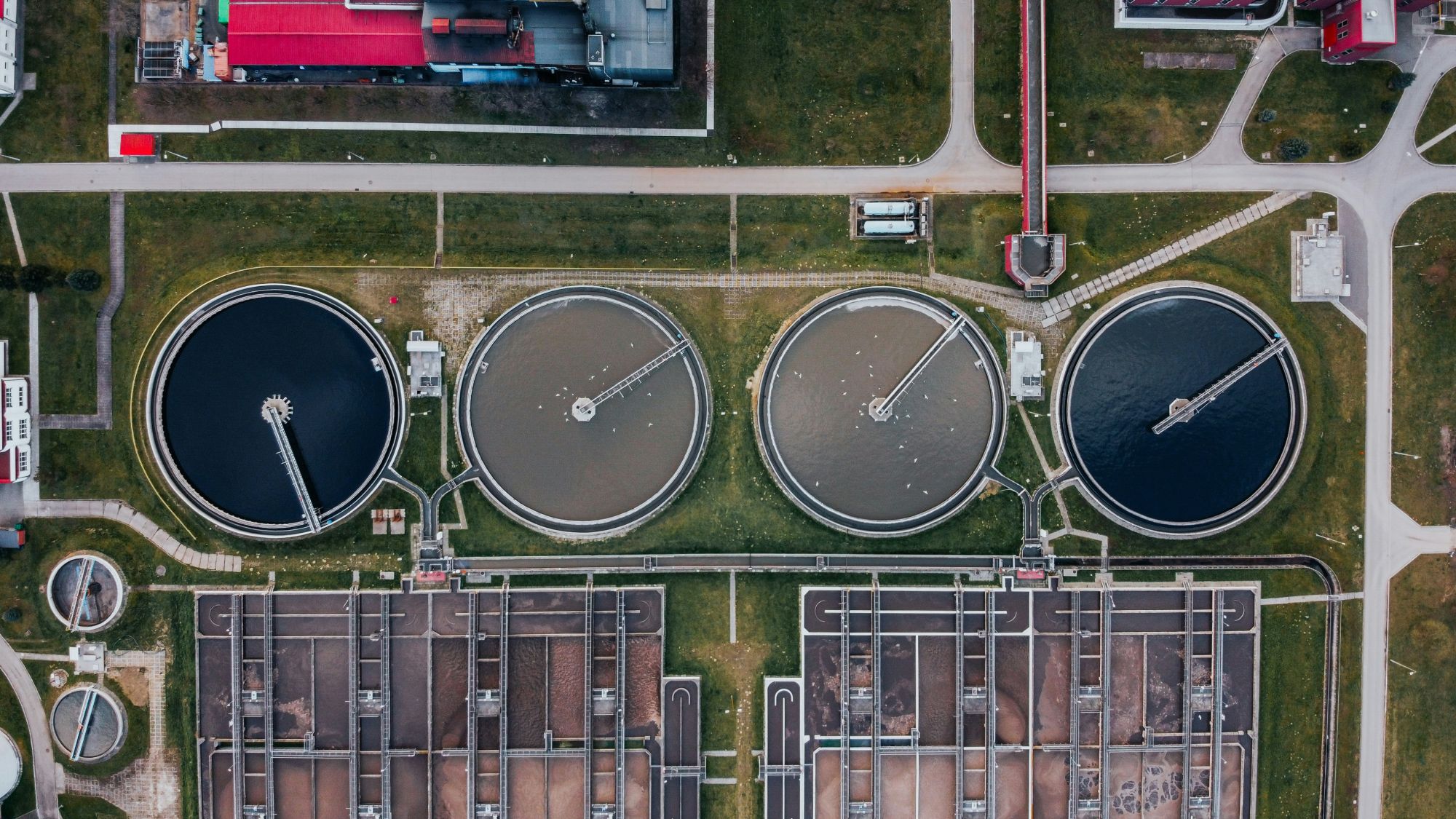
Understanding odours around a wastewater treatment plant
Sewer network, pumping stations and treatment plant: where these odours come from, and why your report matters
Public sanitation (sewer network, pumping stations, wastewater treatment plant) is essential to protect public health and aquatic environments. It can nevertheless cause odours noticed by residents. This page aims to explain, clearly and based on the available technical and regulatory knowledge, where these odours come from, how to recognise them, and what to do if they bother you.
A local authority's “sanitation system” is made up of two main parts: the collection system (the network and its ancillary structures) and the wastewater treatment plant (WWTP).
The collection network
Wastewater usually flows by gravity through underground pipes. There are two main types of network:
- Separate network: wastewater and rainwater flow through two separate pipes
- Combined network: wastewater and rainwater flow through the same pipe, with overflow structures (storm overflows) in case of heavy rain
Diagram: Syndicat Intercommunal d'Assainissement du Bassin de Sallanches
The pumping station
When the terrain does not allow wastewater to flow by gravity to the plant, a pumping station (or lift station) is needed. It is an underground structure in which wastewater accumulates before being pumped to a higher point in the network. These structures are generally compact, often located in urban areas or at low points, sometimes right next to homes. They are usually fitted with manholes (for maintenance) and openings for ventilation.
The treatment plant
A wastewater treatment plant treats the collected wastewater before releasing it into the natural environment. Treatment is generally organised in several stages:
- Pre-treatment: screening (removal of solid waste), grit removal and degreasing (removal of sand and grease)
- Primary treatment: settling of part of the suspended solids, often in large open circular tanks
- Secondary (biological) treatment: breakdown of organic pollution by bacteria, usually in activated sludge tanks
- Tertiary treatment (depending on the site): additional treatment of nitrogen and phosphorus, or disinfection
- Sludge treatment: thickening, digestion and dewatering, before recovery (spreading, composting) or disposal
Key point
In normal operation, a well-designed, well-run and well-maintained network, pumping station or plant should not cause significant odour nuisance for neighbours. A noticeable, recurring odour may point to a malfunction or a structure that needs maintenance.
Pumping station / network vs treatment plant: different odour profiles
The network and pumping stations on the one hand, and the treatment plant on the other, do not present the same odour nuisance risks, in particular because wastewater stays in them under different conditions.
| Criterion | Network / pumping station | Treatment plant |
|---|---|---|
| Nature of the risk | Stagnation and septicity of wastewater at low points and in wet wells | Occasional emissions linked to the different treatment stages |
| Enclosure | Structures often underground, with little or no ventilation/odour control | Pre-treatment and sludge treatment structures more often covered and deodorised in recent plants. Older plants may still have open structures. |
| Proximity to the public | Often in dense urban areas, sometimes a few metres from homes | Generally further away, with a dedicated perimeter |
| Main aggravating factor | Long retention time (dry weather, low night-time flow). Type of products in the network (e.g. restaurant grease). | Hydraulic or organic overload, failure of a piece of treatment equipment |
Sources: ASTEE – French scientific and technical association for water and the environment • French national public sanitation portal • INERIS / AIDA – ICPE and IOTA regulations • French water agencies
Even a well-managed sanitation system can at times cause noticeable odours. Most of these situations are occasional and identifiable. The table below lists the main odour sources observed.
| Odour source | Description | Why does it smell? | Frequency | Typical timing |
|---|---|---|---|---|
| Pumping station wet well | Underground pit where wastewater accumulates before pumping | Long retention time favouring anaerobic fermentation. Build-up of organic matter or grease plugs depending on what enters the network. Filling of the station can also push air out through vents and ventilation grilles. | Frequent when flow is low. Occasional emissions depending on lifting / pumping / accumulation and transfer operations | Night and early morning, dry weather |
| Leaky manhole or inspection cover | Access point to the network at street level | Faulty seal letting foul air escape from the network | Occasional | Variable, depending on changes in temperature and atmospheric pressure |
| Screening and pre-treatment | Removal of solid waste at the plant inlet | Coarse and organic matter exposed to the open air | Frequent but localised | Working hours, or continuously around screenings storage areas |
| Grit removal and degreasing | Separation of sand and grease from wastewater | Grease and organic matter on the surface, sometimes fermenting | Frequent but localised | Variable |
| Overloaded or under-aerated biological tank | Biological treatment receiving more load than its capacity, or insufficient aeration | Local anaerobic conditions producing sulphur compounds | Occasional | Can last several days |
| Aeration of the biological tank | The biological tank is often aerated and mixed using submerged pumps | Sludge is suspended, set in motion and stirred | Regular | Several minutes to several hours a day depending on the process |
| Sludge thickening and dewatering | Concentration of sludge before recovery or disposal | Concentrated organic matter, rich in nitrogen and sulphur compounds | Frequent but localised | Working hours |
| Sludge storage (silo, storage area) | Treated sludge awaiting removal | Residual fermentation during prolonged storage | Occasional to frequent depending on the operator | Variable |
| Pumping station out of order or in degraded mode | Electrical or pump fault preventing wastewater from being removed normally | Very long retention time, increased anaerobic fermentation | Rare but pronounced | Unpredictable, until repaired |
| Network cleaning or maintenance | Technical cleaning of the pipes | Deposits accumulated at the bottom of pipes are stirred up | Occasional, scheduled | Daytime, limited duration |
| Storm tank or overflow in wet weather | Structure storing or discharging excess wastewater during heavy rain | Diluted wastewater, but sometimes stagnant after the rainfall event | Occasional, weather-related | During and after a rainfall event |
| Odour control out of order or poorly adjusted | Air treatment system (biofilter, scrubbing tower) not working | Foul air is no longer neutralised before release. These odours can disperse depending on the power of the ventilation | Occasional if maintenance is insufficient | Gradual, worsens over time |
| Emptying or maintenance of a structure | Work requiring a wet well or tank to be opened | Brief, concentrated release of accumulated gases | Rare, scheduled | Daytime, limited duration |
Aggravating factors: retention time, weather and substances in transit
Several types of factors strongly influence the intensity of the odours perceived, without this necessarily being a malfunction:
- Wastewater retention time: the longer wastewater stagnates in a pipe or wet well (dry weather, low night-time flow, heat), the more odorous it becomes, in particular through the production of hydrogen sulphide (rotten eggs)
- Light wind: odorous compounds linger near the source instead of dispersing
- Temperature inversion (often in the morning or evening): cold air stays close to the ground, preventing odours from rising and diluting
- Heat: it speeds up the fermentation of wastewater and sludge, and increases the volatility of odorous compounds
- Humidity: it helps odour molecules persist in the air
- Type of substances: sewer networks generally collect domestic wastewater, but in some neighbourhoods businesses, tradespeople or restaurants may also use them. Sometimes certain substances are poured into the network (e.g. grease, paint, solvents, oils), which can generate other odours (solvent, paint) or maintenance problems (e.g. the network being blocked by grease)
- Concentration of effluents: in dry weather or in summer, effluents can be more concentrated and generate more odours because of higher biological activity and potentially longer retention times (e.g. the time between two successive pumping cycles)
Did you know?
A pumping station can seem “odour-free” for several months, then occasionally become a nuisance during a heatwave or periods of low night-time flow: the wastewater then stays longer in the wet well, with higher concentrations of organic matter, which encourages fermentation. This is not always a sign of a breakdown, but it is worth reporting if it happens again.
Sources: ASTEE – odour management in sanitation • INERIS – air quality and odour nuisance • French national public sanitation portal
Odours linked to sanitation cannot be reduced to a single olfactory signature. Depending on the structure involved, several types of odour can be perceived, associated with different chemical compounds.
| Odour perceived | Descriptor | Associated compound | Possible source | Timing |
|---|---|---|---|---|
| Rotten eggs | Sulphurous, pungent | Hydrogen sulphide (H2S) | Pumping station, septic network, under-aerated tank | Dry weather, night, low flow |
| Mercaptans | Rotten eggs, sewer, leeks | Sulphur-containing compounds | Any kind of sanitation effluent | Variable |
| Ammonia | Pungent, irritating | Ammonia (NH3) | Sludge, biological treatment, sludge storage, urine | Thickening, prolonged storage |
| Sewer / musty | Stale, stagnant | Mixture of sulphur compounds and VOCs | Leaky manhole or cover, poorly ventilated pipe | Variable, often continuous |
| Mouldy / earthy | Earthy, vegetal | Geosmin and related compounds | Stored sludge, drying beds | Prolonged storage |
| Vinegar / acid | Pungent, sour | Volatile fatty acids (VFAs) | Network or wet well under anaerobic decomposition | Variable |
| Fish / amine | Pungent, animal | Amine compounds | Digested sludge, biological treatment out of balance | Occasional |
| Greasy / rancid | Greasy, sickly | Long-chain fatty acids | Grit removal and degreasing, pumping station receiving restaurant grease | Working hours |
| Chemical / bleach (rare) | Chemical, pungent | Chlorinated compounds | Disinfection or chemical odour-control treatment | Rare, occasional |
The compounds in a nutshell
- H2S (hydrogen sulphide): produced by bacteria in the absence of oxygen in stagnant wastewater; detectable by the human nose at very low concentrations, well below any danger threshold
- NH3 (ammonia): produced when nitrogen-rich matter breaks down, typical of sludge and biological treatment
- VOCs (volatile organic compounds): a broad family of volatile carbon-based molecules, behind many fermentation odours
- Volatile fatty acids (VFAs): intermediate products of anaerobic breakdown, responsible for sour or “vinegary” notes
- Mercaptans (thiols): these include ethanethiol, methanethiol and methyl mercaptan, which are detectable at extremely low thresholds. This means they are noticed even at tiny concentrations (odourless natural gas contains them for safety reasons)
Sources: ASTEE – characterising odours in sanitation • INERIS – air quality • French water agencies
In France, the vast majority of networks and plants treating domestic wastewater fall under water regulations (the IOTA regime – Installations, Structures, Works and Activities), under heading 2.1.1.0 of the “water” nomenclature of the Environmental Code, and are governed by the Order of 21 July 2015 on public sanitation systems. Some plants receiving a large share of industrial effluents are also subject to the regulations on Installations Classified for Environmental Protection (ICPE), in particular headings 2750 (industrial plants) and 2752 (mixed plants).
The Order of 21 July 2015 explicitly states that the structures of the sanitation system (network, pumping stations, storm tanks, treatment plant) must be designed, located and operated “so as to minimise the emission of odours” and other nuisances for neighbours. The owner (local authority or operator) must keep an up-to-date register of incidents and breakdowns, as well as a preventive maintenance schedule for the structures.
Main obligations relating to odours
- Design and siting of structures so as to minimise odour emissions for neighbours
- Regular cleaning of the network to limit deposits and stagnation
- Ventilation and, where appropriate, odour control of pumping stations and pre-treatment structures
- Monitoring and maintenance of electromechanical equipment (pumps, aeration systems) to avoid prolonged breakdowns
- Controlled management of storm tanks and overflows, designed to protect residents from odour nuisance
- Keeping a register of incidents and a preventive maintenance schedule
Key point
The regulations impose precise obligations to limit odour nuisance from networks, pumping stations and wastewater treatment plants. A documented report (date, time, weather conditions, intensity, description of the odour) helps the relevant services (local authority, operator, water agency) identify the structure involved and any malfunctions on the network, so as to check that these obligations are being met.
Sources: Légifrance – Order of 21 July 2015 • AIDA / INERIS – ICPE headings 2750 and 2752 • French national public sanitation portal – regulations
Noticing an odour near a network, a pumping station or a wastewater treatment plant is not abnormal in itself: some occasional emissions (cleaning, maintenance, very hot spells) are expected and generally brief. On the other hand, an intense, recurring or unusual odour may reveal a malfunction that is worth reporting.
Situations that are usually normal
- A brief odour during cleaning or maintenance work
- A stronger odour at a pumping station during a very hot spell or periods of low night-time flow
- An occasional odour at a storm tank after heavy rainfall
Situations to report
- A strong odour lasting several hours or days, particularly at a pumping station or manhole
- A new, unusual odour, or one very different from what is usually noticed
- An odour associated with repeated nuisance, especially at night or early in the morning
Every report, even for a nuisance that seems modest, helps to pinpoint the structure causing the nuisance (network, pumping station or plant) and, where necessary, to guide corrective action by the operator or inspections by the relevant services. The precision of the report (location, date, time, duration, intensity, weather conditions) is decisive for effective action.
Key point
Reporting an odour is neither excessive nor pointless: it is a tool for shared environmental vigilance. The more precise the reports (exact location, date, time, duration, intensity, weather), the more useful they are for identifying the structure involved and improving the situation.
H₂S can be dangerous at very high concentrations (industrial use, confined spaces), but neighbourhood nuisances generally occur at levels far below toxic thresholds. If you have breathing difficulties or health concerns, the regional health agency (ARS) is the competent contact.
Contact the relevant authorities →As a registered member, access a report-to-administration form with a letter template pre-filled from your report history.
Access the letter templateIs an odour from a wastewater treatment plant or the sewer network bothering you?
Report this odour